

Generative Engine Optimization Tools that Marketing Teams Actually Use

If you‘ve noticed your brand appearing less frequently in ChatGPT answers, you’re not alone. Savvy marketers are using generative engine optimization tools to address this issue. These tools help your content get cited by AI platforms, rather than being buried under competitors.
Fortunately, I spend way too much time monitoring how content performs across different platforms (an occupational hazard of being a marketer), and I’ve watched GEO tools evolve from experimental technology into genuinely helpful software that marketing teams actually rely on.
In this guide, I’ll break down what generative engine optimization tools actually do, how they complement your existing SEO strategy, and which ones are worth your time and budget.

Table of Contents
- What is a generative engine optimization tool?
- GEO software vs. SEO software
- How Generative Engines Choose Sources
- Generative Engine Optimization Tools that Marketing Teams Actually Use
- 1. HubSpot Marketing Hub with AI Search Grader
- 2. GEO Ranker
- 3. Profound
- 4. SEO.ai
- 5. Letterdrop
- Frequently Asked Questions About GEO Tools
What is a generative engine optimization tool?
A generative engine optimization tool is a software that helps create and improve digital content to increase its visibility and inclusion in responses from AI platforms like ChatGPT, Google AI Overviews, and Claude AI.
Basically, GEO tools analyze how AI models like ChatGPT and Claude “read” and prioritize content, then give you recommendations on structure, formatting, and language that increase your chances of being cited in their responses to inquiries.
So, how does GEO differ from SEO? SEO is focused on ranking high in SERPs by optimizing for keywords, building backlinks, and praying to the algorithm gods that your website lands at the top of the first results page.
In contrast, GEO means you’re optimizing to be quoted or referenced within the AI-generated response. The AI doesn’t show a results page — it synthesizes information from multiple sources and generates one cohesive answer.
The mechanics differ from traditional SEO because AIs aren‘t limited to examining keywords and backlinks. Instead, they’re evaluating credibility, clarity, how well your content answers specific questions, and whether your information can be easily extracted and synthesized.
In short, while SEO gets you clicked, GEO gets you quoted.
GEO software vs. SEO software
We know that SEO helps people find your website through search engines. GEO gets your brand mentioned in AI answers. Does this mean marketers should choose one method over the other? No. You need both, and they actually complement each other.
While SEO builds your discoverability foundation, GEO extends your reach into AI platforms where people are increasingly getting their answers. They‘re not competing strategies; they’re covering different parts of the customer journey.
A user might ask ChatGPT for product recommendations (GEO territory), see your brand mentioned, and then search for your company name on Google to learn more (SEO territory). Or they might find you through organic search first, and later reencounter your brand in an AI answer, reinforcing your authority.
The key is to know when to prioritize SEO or GEO.
Prioritize SEO when:
- You’re building a new site or brand and need foundational visibility
- Your audience primarily uses traditional search engines
- You’re in e-commerce or local services where Google Maps and shopping results matter
- You need direct website traffic for conversions
Prioritize GEO when:
- Your target audience is heavy AI users (tech-savvy, younger demographics, developers)
- You’re in industries where people ask questions (B2B software, education, health)
- You want to establish thought leadership and get cited as an authority
- Your competitors aren’t doing it yet (first-mover advantage)
It’s that simple.
How Generative Engines Choose Sources
When you ask an AI a question, it scans through massive amounts of content to generate its answer, looking for signals that indicate “this information is trustworthy and relevant.”
The AI prioritizes content that’s crystal clear and well-structured. If your content rambles or buries the answer six paragraphs deep, the AI will skip over it for something more straightforward.
This is where structure becomes crucial, so descriptive headers, bullet points for key facts, and clear definitions help the AI quickly extract the information it needs. The easier you make it for the AI to understand and quote you, the more likely you’ll get cited.
Citations and external credibility are must-haves. AIs are trained to value content that shows its work, much like a good college research paper. When your content references authoritative sources, includes data from reputable studies, and links to other credible sites, AIs interpret that as a signal that you’ve done your homework.
Entity consistency is another significant factor, although it may sound more complicated than it is.
Essentially, if you’re writing about “email marketing,” stick with that term consistently rather than switching between “email campaigns,” “inbox strategy,” and “electronic mail promotion.”
AI seeks precise and consistent use of terms and entities to understand the content’s actual subject matter and its connections to other authoritative sources on the same topic.
This is precisely where GEO tools come in handy. They analyze your content and flag issues like unclear structure, missing citations, inconsistent terminology, or buried key information. Instead of guessing what might help you get cited, these tools give you specific recommendations. They essentially reverse-engineer what AIs are looking for and give you a roadmap to fix it.
Generative Engine Optimization Tools that Marketing Teams Actually Use
1. HubSpot Marketing Hub with AI Search Grader
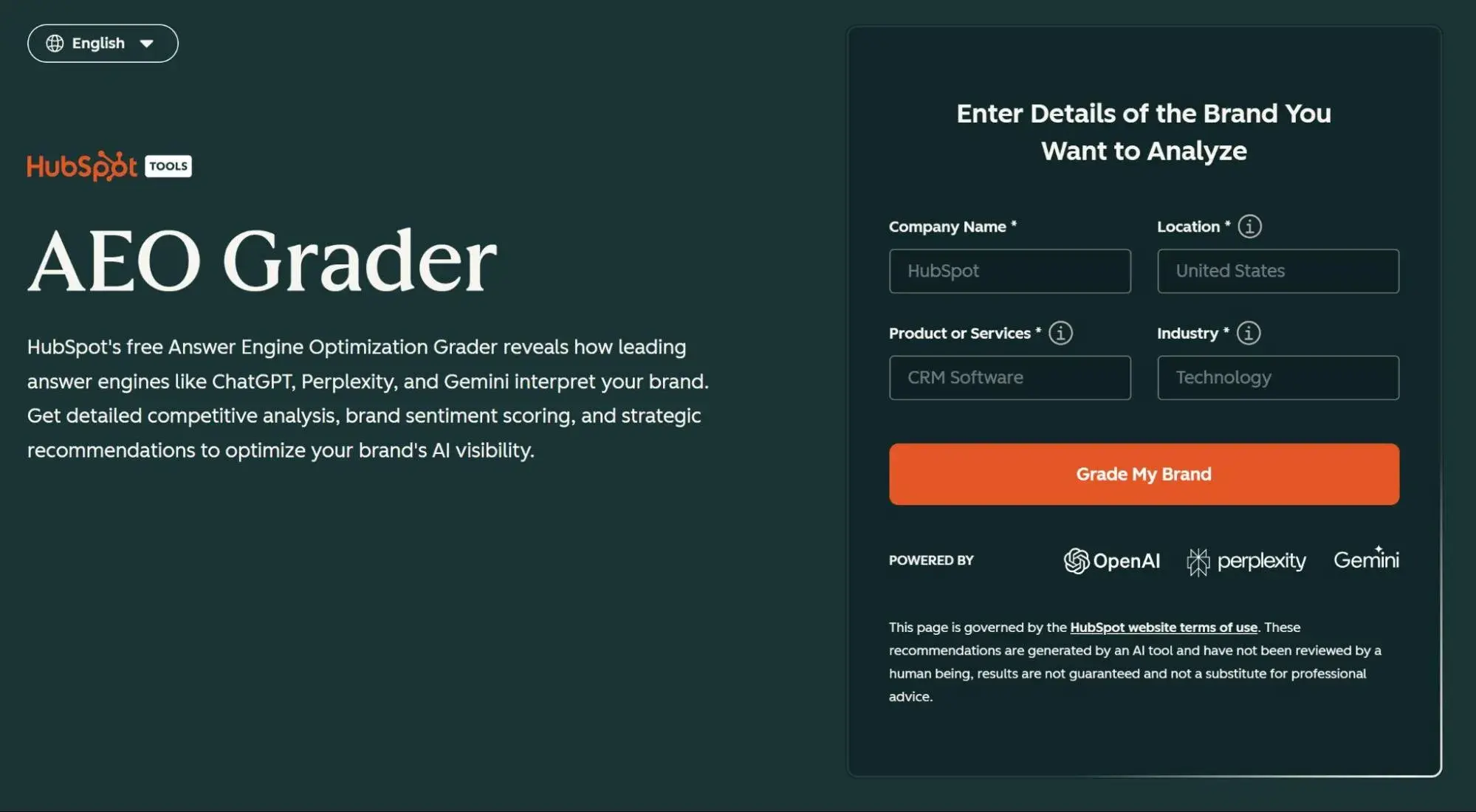
Best for: HubSpot users who want native GEO capabilities without adding another platform to their stack
Stack fit: Already in your stack if you‘re a HubSpot customer. The AI Search Grader analyzes how your content performs in AI search results and provides optimization recommendations directly within HubSpot—pairs with HubSpot’s Content Assistant for AI-optimized content creation.
What to measure after adoption: AI Search Grader scores over time, citation rates in AI platforms for HubSpot-optimized content, content performance improvements when following AI recommendations, and how AI visibility correlates with traditional SEO metrics you’re already tracking in HubSpot.
2. GEO Ranker
Best for: Tracking your brand’s visibility across multiple AI platforms (ChatGPT, Perplexity, Google AI Overviews, Claude)
Stack fit: Works alongside your existing SEO tools and HubSpot. Think of it as the “AI version” of rank tracking. Data can be reported into HubSpot dashboards for centralized reporting and analysis.
What to measure after adoption: Track citation frequency across different AI platforms, which topics you’re being cited for, and how your visibility trends over time compared to competitors.
3. Profound

Best for: Getting actionable optimization recommendations for existing content
Stack fit: Can integrate with HubSpot via API to audit your existing blog posts and pages. Use it during content audits or before publishing. Recommendations can feed back into your HubSpot content workflow.
What to measure after adoption: Improvement in AI citation rates for optimized content vs. non-optimized baseline, time saved in content optimization, and conversion of recommendations into measurable visibility gains tracked in HubSpot analytics.
4. SEO.ai
Best for: AI-native content creation that’s optimized for both traditional search and generative engines
Stack fit: Integrates with HubSpot CMS via Zapier or API. Create optimized content briefs and drafts that you can publish directly to your HubSpot blog. Works in conjunction with HubSpot’s built-in Content Assistant.
What to measure after adoption: Content production velocity, citation rate of AI-generated content vs. human-only content, time to publish, and whether AI-assisted pieces maintain your brand voice standards.
5. Letterdrop
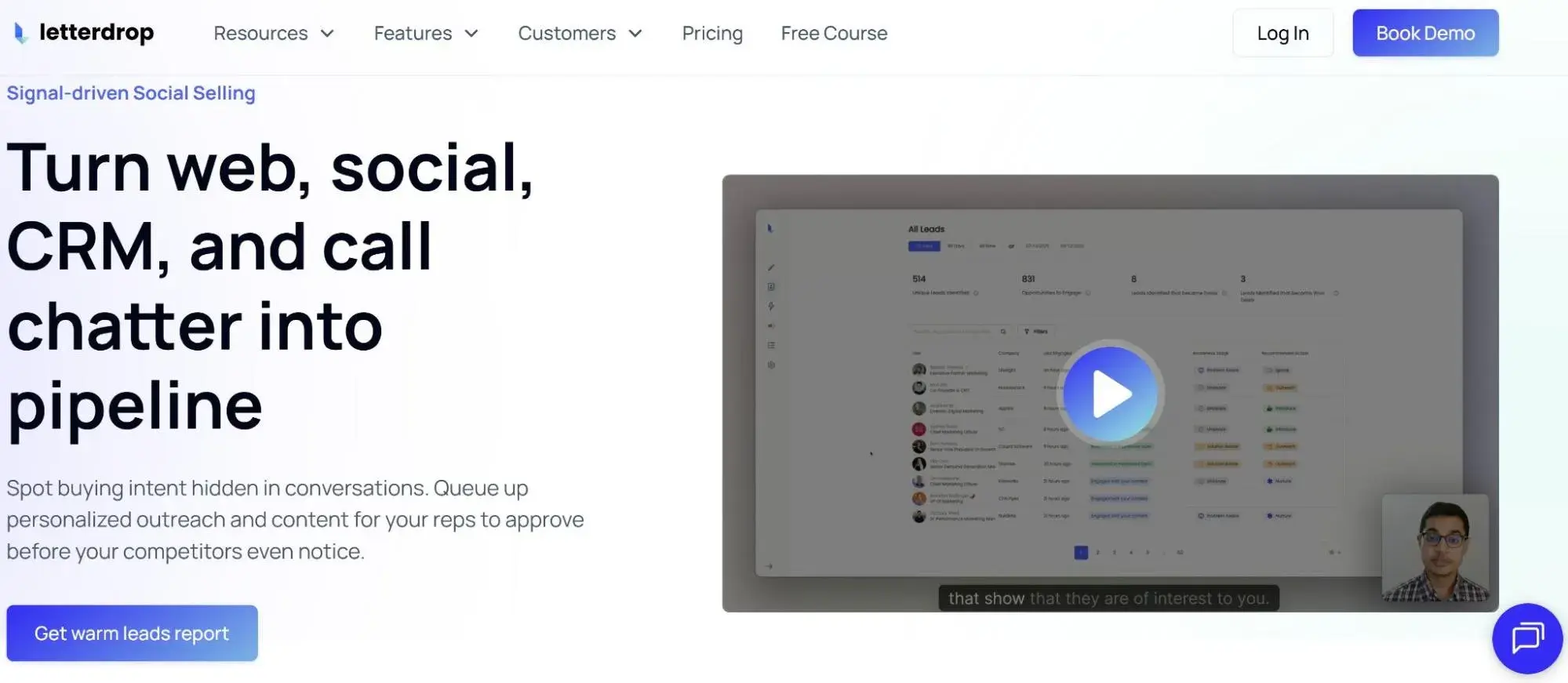
Best for: B2B content teams who need both SEO and GEO baked into their content workflow with native HubSpot integration
Stack fit: Direct HubSpot integration that syncs content, tracks performance, and feeds data into your HubSpot reporting. More comprehensive than a point solution — it’s a content operations platform with GEO features built in.
What to measure after adoption: Overall content ROI in HubSpot dashboards, AI platform visibility, organic traffic growth, lead attribution from AI-optimized content, and whether the integration actually streamlined your workflow.
How to Choose a GEO Tool
To choose the right GEO tool, identify your actual problem, not the trendy solution. Are you invisible in AI answers and need to understand where you stand? Get a visibility monitoring tool first. Do you already know you‘re not being cited but don’t know why?
You need an optimization tool that audits your content and gives you specific fixes.
Trying to scale AI-optimized content production? Look for creation and brief tools. Don‘t buy a comprehensive enterprise platform when you really just need citation tracking — and definitely don’t buy citation tracking if your content fundamentally isn’t structured for AI discoverability yet.
Use a simple evaluation rubric to compare tools.
- Coverage: Does it track the AI platforms your audience actually uses?
- Accuracy: Are the recommendations based on real AI behavior or just guesses?
- Actionability: Can your team implement the suggestions without a PhD in machine learning?
- Integration: Does it work with your existing stack (CMS, analytics, project management), or does it create more silos?
- Governance: Can you control access, maintain brand standards, and audit what the tool is doing with your data? Score each tool on these five dimensions, and the right choice usually becomes obvious.
Finally, involve the right people early. Your SEO team needs to vet whether GEO recommendations conflict with the existing SEO strategy. Your content team needs to use the tool daily, so if they find it clunky or confusing during the demo, walk away.
Your operations team evaluates the integration complexity, licensing, and whether this solution adds to or reduces tool sprawl. Your analytics team confirms that you can actually measure success and pull data into existing dashboards.
A tool that works for one team but frustrates the other three is a failed implementation waiting to happen.
GEO Tool Buying Checklist
Before the demo:
- [ ] Define your primary problem (visibility tracking, content optimization, or content creation)
- [ ] List AI platforms your audience uses most
- [ ] Document your current content workflow and tech stack
- [ ] Set a realistic budget range
- [ ] Identify 3-5 success metrics you’ll track in the first 90 days
During evaluation:
- [ ] Score tool on coverage, accuracy, actionability, integration, and governance (1-5 scale)
- [ ] Request a trial or sandbox with your actual content
- [ ] Have content creators test the interface (not just watch a demo)
- [ ] Ask for customer references in your industry and company size
- [ ] Confirm what’s included vs. add-on modules
- [ ] Review data privacy and security policies
- [ ] Check integration documentation for your CMS and analytics platform
Cross-functional review:
- [ ] SEO sign-off: Recommendations align with (not contradict) SEO strategy
- [ ] Content sign-off: Team finds the tool intuitive, and the workflow fits reality
- [ ] Ops sign-off: Integration is feasible with current resources and timeline
- [ ] Analytics sign-off: Data can flow into existing reporting dashboards
- [ ] Legal/Security sign-off: Data handling and privacy meet company standards
Before purchase:
- [ ] Calculate actual cost (licensing + implementation + training + maintenance)
- [ ] Define ownership (who’s the internal champion and admin?)
- [ ] Create 30-60-90 day adoption plan
- [ ] Set review checkpoint to evaluate ROI after 6 months
- [ ] Document what “success” looks like and when you’d cancel
Red flags to watch for:
- Vendor can’t explain how they track AI citations (vague = probably inaccurate)
- Zero integration options with your existing stack
- Pricing structure that punishes growth or usage
- No straightforward onboarding or training plan
- Sales pressure to buy “everything” when you need one specific capability
- Customer references all in different industries/sizes than yours
The tool that scores highest on your rubric and gets enthusiastic buy-in from all four teams (SEO, content, ops, analytics) is your winner. If you can‘t reach consensus, you probably haven’t found the right fit yet — or you need to resolve an internal alignment issue before purchasing external software.
Frequently Asked Questions About GEO Tools
Do GEO tools replace my current SEO stack?
No, GEO tools don’t replace your SEO stack; instead, they complement it. Traditional SEO still drives the majority of your organic traffic through search engines, while GEO extends your visibility into AI platforms where people increasingly get answers.
Keep your existing SEO tools (e.g., Ahrefs, SEMrush) and layer geographic capabilities on top of them. The best approach is to maintain strong technical SEO fundamentals (site speed, mobile optimization, schema markup) since these same elements also help AIs crawl and understand your content.
How do I prove GEO’s value without changing my entire strategy?
Begin with a focused pilot on a single high-value topic cluster where you already have established content. I suggest 5-10 related articles on a subject your audience frequently asks about.
Optimize that cluster using GEO best practices (clear structure, citations, entity consistency) while leaving the rest of your content unchanged as a control group. Track AI citation frequency for the optimized cluster compared to your baseline, but also monitor down-funnel signals like branded search volume, direct traffic, and conversions from users who discovered you through AI platforms.
Run the pilot for 60-90 days, and if you see measurable improvements in either visibility or business impact, you have data to justify expanding GEO across more content.
What’s the minimum viable GEO pilot?
Start with GEO Ranker for measurement. It tracks your visibility across major AI platforms without requiring any changes to your content, giving you a baseline to work from. For optimization, use Profound or HubSpot‘s AI Search Grader if you’re already on HubSpot.
Both HubSpot’s AI Grader and Profound will provide you with specific, actionable recommendations you can implement immediately. Pick one content cluster you own completely, ideally 5-8 blog posts on a single topic where you already rank decently in traditional search and know your audience asks AI tools about it.
Optimize that cluster over 2-3 weeks, then track it for 60 days.
You’re looking for two key metrics: increased citations on AI platforms (as measured by your tracking tool) and any uptick in branded searches, direct traffic, or conversions that correlate with improved AI visibility.
This approach costs $200-$500 per month in tools and a few weeks of content work, and provides you with concrete data on whether GEO moves the needle for your business. If it works, you‘ve got proof to expand; if it doesn’t, you haven’t blown your entire content strategy or budget finding out.
How often should I monitor AI citations and visibility?
Begin by monitoring your progress weekly during the first 60-90 days to identify patterns, determine which optimizations are effective, and make course corrections promptly.
Once you‘ve established a baseline and your strategy stabilizes, shift to biweekly check-ins. AI citation patterns don’t fluctuate as wildly as daily search rankings, so you don’t need to obsess over them daily.
Create monthly roll-ups for leadership that tie AI visibility metrics to business outcomes (traffic, leads, brand searches) since executives care more about “did this drive results?” than “we got cited 47 times this month.”
Are there risks to optimizing for LLMs?
Yes, and the biggest one is sacrificing accuracy for AI-friendliness. If you oversimplify complex topics or remove nuance just to create “quotable” content, you risk being cited for information that’s technically correct but misleading in context.
Set a guardrail: Every piece of content should be reviewed by a subject matter expert before publication, regardless of its score on GEO metrics.
Brand voice is another risk. Content optimized purely for AI discoverability can start sounding robotic, generic, or like everyone else in your space.
Establish a review step where someone on your team reads the final piece and asks, “Does this still sound like us?” If anyone could write your competitors‘ content, you’ve optimized too far.
Governance matters because once an AI cites incorrect information from your site, you can‘t easily “recall” it the way you’d update a blog post. Implement a fact-checking process, cite your own sources properly, and include dates on time-sensitive content so AIs (and humans) know when information might be outdated.
The goal is to be cited often and cited accurately — not just to rack up mentions at the expense of your credibility.

