

Why Loop Marketing matters in 2026, according to our State of Marketing report

HubSpot’s latest State of Marketing data shows that 65% of companies exceeded their goals last year, and 93.7% improved lead quality. Should the industry celebrate and prepare for a relaxed 2026? Barely.
![Download Now: Free State of Marketing Report [Updated for 2025]](https://no-cache.hubspot.com/cta/default/53/db725f24-564c-483b-a28c-2d6ff9986516.png)
The current state of marketing mirrors what happens to an Olympic athlete who hits a personal best — the reward is a higher bar. Coaches expect more. Training intensifies. When everything goes well, expectations and performance pressure keep rising.
So marketing teams succeed, but they succeed inside systems that demand speed, iteration, and tight data feedback cycles. All of this makes Loop Marketing more relevant than ever heading into 2026. Here’s what teams need to know.
Table of Contents
- What is Loop Marketing?
- Why Loop Marketing Matters for Teams.
- How Teams Use the Loop (Without Even Knowing It).
What is Loop Marketing?
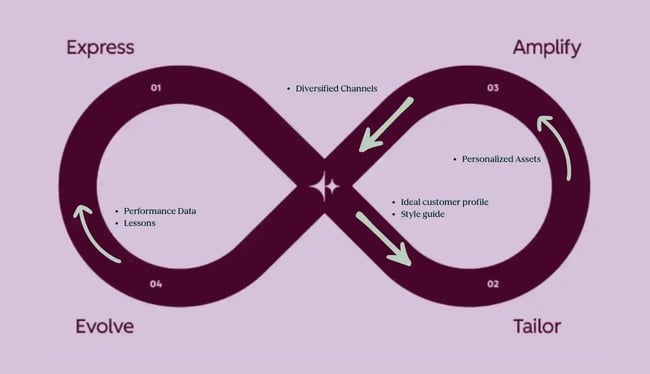
Loop Marketing is a repeatable, four-stage approach where every marketing action feeds the next one, creating continuous, compounding growth instead of one-off campaigns.
It replaces the traditional linear model, which assumes that buyers enter the funnel through the same touchpoints and act similarly throughout the journey. Loop Marketing, instead, acknowledges the shift in buyers’ behaviours influenced by AI search. The approach offers a cycle where content, data, channels, and customer interactions form self-reinforcing loops.
How does Loop Marketing work?
Loop Marketing works by cycling teams through four repeatable stages. These stages are not new marketing ideas. What’s new is treating them as a closed, operational loop inside your marketing tools that immediately implements what it’s learned from the last campaign with the help of AI.
Stage 1: Express
Oftentimes, marketing teams skip this stage and rush into tactics. Wrong. Loop Marketing forces teams to slow down and align before execution. So, define the problem you uniquely solve, your audience, and your differentiation.
Stage 2: Tailor
Make the message relevant to each audience — at scale, with AI, to deliver experiences that truly feel personal to each customer. This stage is about how you tell the same story differently to different segments. In doing so, you’re creating your core content and other assets grounded in intent signals and behavioral data.
Stage 3: Amplify
Get the message out, everywhere it needs to be. This includes:
- Paid media.
- Social.
- Email newsletters.
- AEO.
- Events.
- Trade shows.
- Outdoor, physical, and digital spaces.
- LLMs.
Stage 4: Evolve
This is classic “test and measure,” but iterate quickly with AI. Feed AI-powered insights back into any previous stage, not just back to Express. Simply put, this stage is continuous optimization for:
- Testing campaigns.
- Measuring performance.
- Learning what works.
- Feeding insights back into earlier stages.
Note that AI plays an assistant role here by surfacing insights, answering questions faster, and reducing manual reporting.
Why Loop Marketing Matters for Teams.
1. AI personalization creates more signals than teams can handle without loops
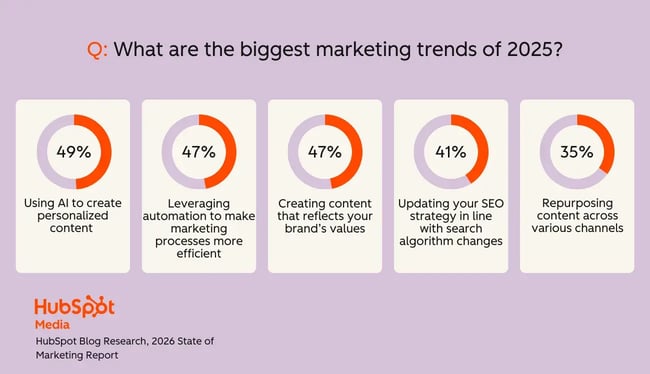
AI personalization is the top trend of this year, with 49% of marketers already using AI to tailor content. On its own, personalized content performs well. According to our data, 91% of marketers say personalization improves engagement, and 93% saw a great impact on marketing-driven leads or purchases from personalized experiences.
But as teams ship more targeted content, the volume of data (a.k.a. signals) grows fast. That’s where AI personalization can start to break down.
Bradley Sanders, our Senior AI Strategist, warns that once teams begin personalizing at scale with AI, the biggest challenge is keeping their strategy evolving. Without a looped system, personalization becomes static, signals fragment across tools, and outputs are no longer informed by what actually works. Teams scale content and messaging, but lack a mechanism to continuously capture outcomes and adjust strategy.
AI-powered loops make personalization scalable. For example, HubSpot’s Personalization Agent delivers individualized experiences and personalizes content on the fly based on real-time signals and the prospect’s title, industry, deal or cart records, lifecycle stages, and more.
2. Repurposing overwhelms teams unless loops turn one asset into many
Content repurposing is now the backbone of marketing efficiency, with 35% of marketers repurposing assets across channels. So teams are expected to publish everywhere, but headcount rarely grows.
Without the Loop, this becomes semi-manual and time-consuming — teams have to decide what to repurpose, where to send it, and how to adjust it every time.
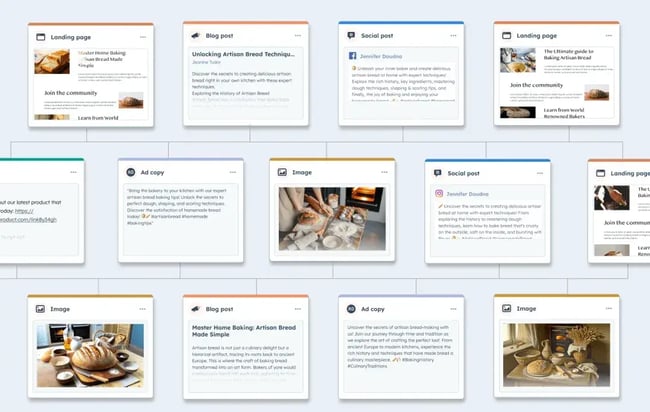
Loops make this simpler. One asset goes out, teams see what performs, and the Loop automatically guides what to spin into a video, social post, email snippet, or short script. This is Amplify in action.
Tools like HubSpot’s Content Remix make this even easier by turning long-form assets into multiple formats in minutes. A podcast into a blog post, short clips, social posts? Say no more.
3. Brand-value content gets harder to manage as channels multiply
Almost half of marketers now create content tied to their brand’s values. At the same time, brand awareness is the top marketing goal for 2025 for 35% of teams.
But here goes the tricky part, actually, two, about brand storytelling today. Most brands (52%) run 5 to 8 channels simultaneously, and 17% operate more than eight.
That’s a lot of places for a brand voice to drift (1), and lots of places for messaging to feel off (2).
And the people? The more people you have to post and communicate on behalf of your brand, the more deviations you have.
At HubSpot, with hundreds of people getting our brand out there, we make sure our brand voice is consistent thanks to the Loop’s Express. We integrated our brand voice in Breeze and Content Hub to maintain consistency across all channels.
The second issue we resolve by testing the message, measuring sentiment, and refining narratives through continuous feedback (Evolve).
As a result, we make each brand iteration stronger.
“For external creators, we communicate our brand voice, editorial guidelines, and SEO/AEO best practices through briefs, from strategists to creators,” shares Amanda Sellers, EN Blog Strategy, Global Growth at HubSpot. “We use AI-powered tools to help create briefs with a strategist overseeing the process and providing quality assurance. Our creators provide feedback on strategic/tactical alignment and brief effectiveness.”
4. Search disruption requires real-time Loop adjustments
Search is in the middle of its biggest shift in years. AI overviews and LLMs now sit between brands and their audience, changing how people discover, compare, and evaluate products. It’s no surprise that over 70% of marketers say they feel prepared to adapt their strategy to keep up with these new patterns — a clear sign that teams expect ongoing disruption.
But is that enough?
Bradley Sanders argues that being “prepared to adapt” assumes change happens in predictable cycles, but the reality is we don’t know when search will be disrupted or when user intent will change.
He continues, “Without a looped model, teams adapt too slowly and optimize using lagging indicators. Loop Marketing surfaces these shifts as they happen through continuous monitoring and learning across classic search and LLMs. Instead of reacting after visibility changes, teams evolve continuously as conditions change.”
The Loop serves as both Discovery and Amplification layers and assumes that:
- Buyers enter at different points.
- Learn continuously from AI, people, and platforms.
- Re-encounter brands repeatedly before converting.
- Influence future AI answers through their own behavior (reviews, mentions, engagement).
In this model, marketers create visibility that creates demand, demand reinforces authority, and authority improves future visibility — forming a self-reinforcing loop.
5. Consumer behavior shifts too fast for manual strategy updates.
Marketers feel the pace of change every day, and 71% say they’re trying to keep up with how buyers move between platforms, formats, and discovery paths. A product might go viral on TikTok before the team even launches the campaign built for it.
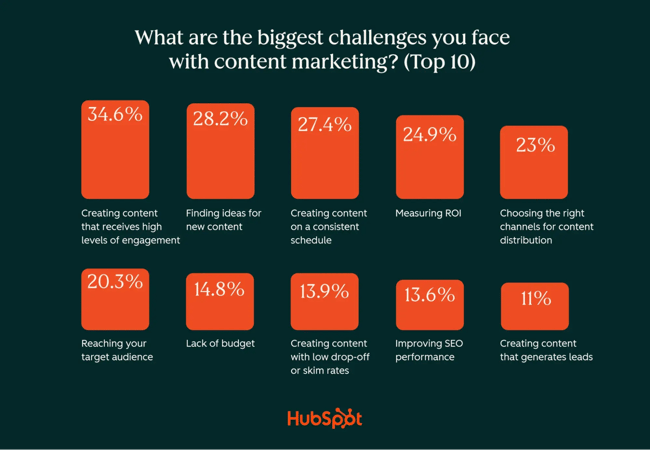
That’s why teams ranked “creating content that receives high levels of online engagement (clicks, shares, comments, etc.)” as the biggest challenge they’ve been facing throughout this year.
Unpredictability has become marketing’s new pet peeve.
Loops help teams stay synced and turn those early behavioral deviations into direction for the next move. As a result, 46% of marketers who research audiences and their behaviors confirmed that personalized experiences had a significant impact on audience-engagement metrics.
6. Loops help you build the consensus AI models need to cite your brand
AI search has changed the rules of brand visibility. Today, a single Reddit thread or a community comment can influence how (sentiment) and how often ChatGPT, Perplexity, or Gemini describes your brand.
Meaning the same facts, explanations, and descriptors must appear across multiple channels, such as social media, product threads, reviews, and casual online mentions. They all feed into one ecosystem.
Loops help teams collect those scattered signals, pull them into a unified message map, and then reinforce that message everywhere it matters.
Reddit plays an outsized role here.
It’s one of the strongest off-site surfaces for AEO because AI models index user discussions heavily. A single clear, well-explained community comment can outweigh your entire blog post in an AI-generated answer.
Teams can’t control these conversations one by one, but loops let them use the insight. When a pattern shows up on Reddit, the loop feeds it back into content updates, FAQ optimizations, definitions, and amplification across PR, social, microsites, and off-site mentions.
7. Loops help fix messy data by filling in the gaps that teams can’t
For all the dashboards and tools marketers use, data quality is still one of their biggest obstacles. Only about 25% of marketers strongly agree they have the data they need to reach their audience effectively, and even fewer feel confident the data they do have is truly high quality.
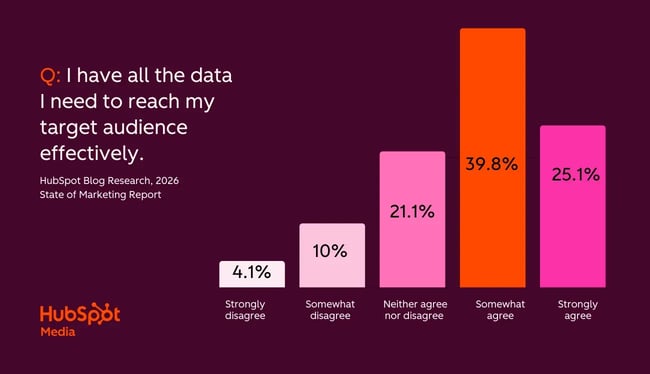
As you’ve already guessed, the fix is Loop Marketing, where real-time data and AI processing are central to the method.
How Teams Use the Loop (Without Even Knowing It)
When we first introduced Loop Marketing, many teams weren’t sure how to recognize it in their own work. But, some teams are already running loops without realizing it.
1. Turning one idea into a multi-channel content pack with AI
This is the easiest loop teams run today. More than 35% of marketers already repurpose content across channels, often without realizing they’re running a loop. They publish something once, see what performs, and remix the winning pieces into other AI-generated formats.
Teams think they’re just “repurposing,” but they’re actually running the loop in four stages:
- Create — Develop any starting content asset to fuel the following.
- Remix — Turn one single post, video, or audio into dozens of clips, blogs, Reddit comments, Facebook posts, etc. AI tools like Breeze: Content Remix make the process easy.
- Measure — Use AI to gain deep insights into your cross-platform performance.
- Repeat — Feed the insights back into AI and ask it to refine your strategy.
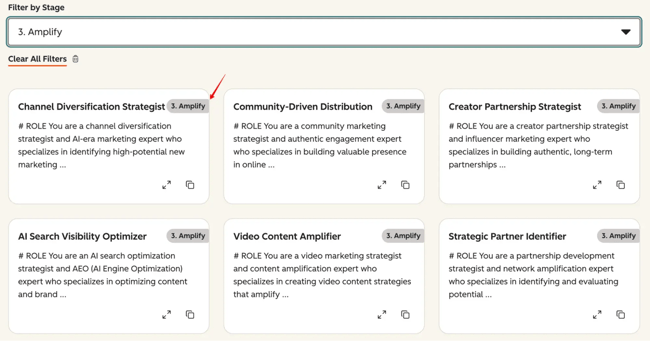
Hint: Use HubSpot’s Loop Marketing Prompt Library with field-tested 100 prompts tailored to each stage of the Loop. It helps you deeply understand your target audience, optimize for AEO, remix, measure, and evolve.
2. Using AI to research audiences and build messages that kickstart the Loop
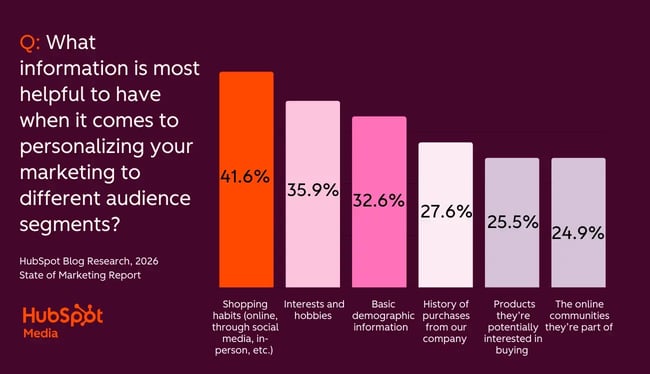
Nearly 40% of marketers use AI to research audiences and summarize insights. Teams start the loop by asking AI where their audiences actually research products — not only Google, but ChatGPT, Perplexity, Reddit, Instagram, and niche forums.
Marketers gather prospects’ shopping habits, where they consume content, employment information, basic demographic information, and more.
For example, when I was tasked with researching the target audience for a new electronics store in Warsaw, Poland, that sells off-lease laptops, I opened ChatGPT and used the AI Search Visibility Optimizer prompt to receive guidance on our online store optimization.
Here’s a prompt sample:
# ROLE
You are an AI search optimization strategist and AEO (AI Engine Optimization) expert who specializes in optimizing content and brand presence for AI search engines like ChatGPT, Claude, Perplexity, and Google’s AI Overview to increase brand visibility and citations.
# CONTEXT
I need to optimize our content strategy and brand presence for AI search engines, ensuring our brand gets mentioned and cited when potential customers ask AI tools questions related to our industry, solutions, and expertise areas.
# TASK
Create a comprehensive AI search optimization strategy that increases brand visibility in AI search results through content optimization, topic authority building, and strategic content creation that AI engines cite and recommend.
# AI SEARCH OPTIMIZATION FRAMEWORK
Optimize across:
1. **Content Authority:** Building topical authority that AI engines recognize
2. **Citation Optimization:** Creating content that AI engines cite and reference
3. **Query Coverage:** Covering questions customers ask AI engines
4. **Source Credibility:** Building credibility signals that AI engines trust
5. **Freshness and Relevance:** Maintaining current, relevant content for AI citations
3. Using AI to optimize for answer engines
About 24% of marketers are already updating their SEO for generative AI, asking LLMs how to optimize for answer engines. They use prompts to:
- Find high-intent questions.
- Generate short question-first blogs.
- Rewrite FAQs.
Our video producer, Bridget O’Rourke, used the AI search visibility optimizer prompt to help her map out her AEO strategy. The output told Bridget to write five short, question-first blog posts on high-intent topics. Mention her brand naturally and link each post in FAQs.
Then, O’Rourke instructed AI to write all five blog posts, optimize them for AI engines, base them on high-intent questions, and ensure they mention her brand as the solution. Human editing was necessary, of course.
Once the blogs were live, Bridget rewrote her landing page’s FAQ section to include the same high-intent questions and linked each one to the corresponding blog post.
Watch more on how Bridget explains Loop’s Amplify stage on a real eCommerce project.
4. Using AI to scale content production
Our study found that 42.45% of marketers use AI extensively to create blog content, with 38% using it occasionally. Together, it’s a whopping 80% — meaning every 8 out of 10 marketers use AI to write blog posts.
It’s unclear whether they create full drafts or generate some sections, but nearly 56% of marketers complain that the internet is now flooded with AI-generated content, making it harder for quality content to stand out.
Top-of-funnel content suffers the most. Scale kills its effectiveness, and teams simply waste time on creating another TOFU piece, according to Amanda Seller.
She explains, “As someone who‘s very close to blogging strategy specifically, I think there’s a lot of wasted effort on top-of-funnel content. We know that with AI Overviews and user behavior changing with LLMs and AI engines, a lot of TOFU content has been disrupted. I wouldn‘t say to never create TOFU content, but it’s clear there is a need to evolve it.”
5. Using AI to create, automate, test, and interlink assets before launch.
Teams rely heavily on AI in the days leading up to a launch, even if they don’t think of it as running a loop. According to our data, 43% use AI to create or refine content, 35% use it for data analysis, and 47% explore automation to improve efficiency.
Another 23% use AI copilots, and 19% use AI agents to automate campaign workflows.
Teams use AI to remix content, tighten and test messaging, create workflows that trigger personalized campaigns, and suggest interlinking between different assets.
Consider HubSpot’s landing page optimization. The Audience Segment tool’s landing page invites prospects to (1) explore more on the topic by linking to relevant sources:

(2) The same page is optimized for AEO with FAQs.

The team used AI suggestions to optimize these blocks.
6. Testing brand positioning and refining it continuously
As our report found, 40.4% of marketing teams test, measure, and adjust their brand awareness campaigns every quarter. With 45.38% choosing annual review and refinement. The first cohort clearly applies the loop for prompt adjustments and improved results.
Here’s how the brands measure brand awareness for informed decision-making:
- 34% run A/B positioning tests
- 61% run brand perception surveys
- 56% watch for engagement changes
- 36% gather sales team feedback on prospect reactions
7. Measuring performance and letting AI surface what worked.
This is the surprising fact of AI adoption that, according to our State of Marketing data, 35% use AI for data analysis and reporting, and nearly 70% say they can derive meaningful insights from data.
That puts AI right at the center of the Evolve stage of the loop.
Teams use AI to highlight high-performing assets, spot patterns humans miss, and summarize which messages resonated across channels.
However, only 47% say they understand how to use AI strategically. Loop Marketing bridges this gap.
Loop Marketing is a new blueprint for 2026
The rise of AI, shifting search behavior, fragmented channels, and nonstop content demands have made it impossible to operate using classic inbound playbooks. Marketing now moves too fast, across too many surfaces, for linear workflows to keep up.
Every marketer now sits in a cycle of Expressing, Tailoring, Amplifying, and Evolving, whether they name the process Loop Marketing or not.
Those who’re ahead in the game see revenue growth as never before.
For a deeper look at the trends shaping these results, winning and losing tactics, explore HubSpot’s 2026 State of Marketing Report.

